I prefer to use Tinderbox due to its flexibility and search capabilities. However, as I'm planning on writing a course called The Digital Writer, I need to think about using the same blog platform as my students so that I'm more than just a little bit famlliar with it. So, for a while, perhaps longer, my posts will move there: http://charlespnelson.com/blog/.
Home
Sana Saeed (The Islamic Monthly writes about "The Shaykh and the F Word." It's a response to the Internet backlash "over sexist comments made by UK-based Shaykh Abu Eesa Niamatullah, affiliated with the Al Maghrib Institute." (His response to the backlash is here.) She writes
Instead of taking this opportunity to get in line and bash the Shaykh- who I do respect otherwise and who actually has done great work in his community – I want to take this opportunity to navigate the underlying, insidious problem that makes it okay for Niamatullah to get away with saying what he said about Feminists.
She writes a balanced critique of the situation, worth reading, and her conclusion is on target:
We have a real problem of sexism and misogyny within and outside our communities – social media chants can be cathartic (and I do love them) and yes we have a right to be angry, but we have an even greater responsibility to be productive in finding the solutions to our ailments.
And to our Shayukh – especially those who have lessened the seriousness of the impact of Shaykh Niamatullah’s ‘jokes’: you have a responsibility to promote that which is good and forbid that which is evil. When you have a segment of your community, of this Ummah, which is constantly under a barrage of hatred and suspicion, constantly have their bodies used as cultural warfare fronts – those jokes that you may see as misunderstood playful banter become daggers in the back.
UPDATE (March 12):
Since yesterday, I've read more posts, and Abu Eesa has issued a clear apology. Reactions are still raging, going from outrage to unconditional support, with a few, very few that are balanced and thoughtful. It reminds me of Doris Lessing's comment,
for every woman or man who is quietly and sensibly using the idea to look carefully at our assumptions, there are twenty rabble-rousers whose real motive is a desire for power.
The "idea" was that of feminism, but can be applied to any idea. Comparing "political correctness" to "progressive thinking" and "communism," Doris Lessing talked about "attitudes of mind" in an interview with Dwight Garner, in which people have
A need to oversimplify. To control. And an enormous distrust of the innovative, of new ideas. All political movements are like this — we are in the right, everyone else is in the wrong. The people on our own side who disagree with us are heretics, and they start becoming enemies. With it comes an absolute conviction of your own moral superiority. There’s oversimplification in everything, and a terror of flexibility. This characterizes political correctness.
Political correctness, feminist correctness, religious correctness, .... Nothing is new.
UPDATE (March 14)
As I've continued to read articles on this topic, I've moved the ones I had previously mentioned above to here so I can continue to add without needing to update this post.
- Ahmad Shaikha. Abu Eesa (AE) Humor Overload, Feminism and Apologies
- Mohammad Ghilan. Drama with Abu Eesa
- Omid Safi. We deserve better than sexist and racist “teachers”: Honoring real leaders, and a rejoinder to Abu Eesa
- Rabia Chaudry. Wa'Mutasima!
- Sana Saeed. The Shaykh and the F Word
- Sheikh Faraz Rabbani vs. Ustadh Abu Eesa: Moral Highgrounds
- Yasir Qadhi. Thoughts on Abu Eesa-Gate
- Zuha Shaikh. Feminism, Abu Eesa and Constructive Dialogues
Scientific American reports on how Equations Are Art Inside a Mathematician’s Brain.
When mathematicians describe equations as beautiful, they are not lying. Brain scans show that their minds respond to beautiful equations in the same way other people respond to great paintings or masterful music.
And more than that, most mathematicians agree on which equations are ugly and which are beautiful. The most beautiful was Euler's identity:
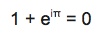
Why is it the most beautiful?
"Here are these three fundamental numbers, e, pi and i," Adams says, "all defined independently and all critically important in their own way, and suddenly you have this relationship between them encompassed in this equation that has a grand total of seven symbols in it? It is dumbfounding."
Weizhong Zhang gives ten practical rules about "about the principles and attitude that can help guide the process of writing in particular and research in general" (see the paper for the explanation of the rules):
- Make It a Driving Force
- Less Is More
- Pick the Right Audience
- Be Logical
- Be Thorough and Make It Complete
- Be Concise
- Be Artistic
- Be Your Own Judge
- Test the Water in Your Own Backyard
- Build a Virtual Team of Collaborators
Perception and memory are shaped by what people want to believe. Idries Shah (Seekers After Truth, page 117) wrote about a spoof documentary in 1969:
The BBC 2 television man Tony Bilbow hoaxed viewers by saying that he had obtained film clips of 'The Great Pismo' and showed forgeries of the film. Then:
'Everybody began to remember The Great Pismo when he made his television debut. Letters piled into the BBC praising the 1920's comedian.
'A woman wrote enthusiastically: "My aunt was a great fan of the Great Pismo - she saw him at a show in Hastings." She added: "What a pity he was not recognized on television before she died in 1957." One man even sent in photographs of The Great Pismo's father.' (Daily Sketch, June 26, 1969, page 9.)
The Daily Kos has published the "Testimony of Pete Seeger before the House Un-American Activities Committee, August 18, 1955." Below are a few excerpts:
I am not going to answer any questions as to my association, my philosophical or religious beliefs or my political beliefs, or how I voted in any election, or any of these private affairs. I think these are very improper questions for any American to be asked, especially under such compulsion as this. I would be very glad to tell you my life if you want to hear of it.
I feel that in my whole life I have never done anything of any conspiratorial nature and I resent very much and very deeply the implication of being called before this Committee that in some way because my opinions may be different from yours, or yours, Mr. Willis, or yours, Mr. Scherer, that I am any less of an American than anybody else. I love my country very deeply, sir.
I feel these questions are improper, sir, and I feel they are immoral to ask any American this kind of question.
I have sung for Americans of every political persuasion, and I am proud that I never refuse to sing to an audience, no matter what religion or color of their skin, or situation in life. I have sung in hobo jungles, and I have sung for the Rockefellers, and I am proud that I have never refused to sing for anybody. That is the only answer I can give along that line.
I decline to discuss, under compulsion, where I have sung, and who has sung my songs, and who else has sung with me, and the people I have known. I love my country very dearly, and I greatly resent this implication that some of the places that I have sung and some of the people that I have known, and some of my opinions, whether they are religious or philosophical, or I might be a vegetarian, make me any less of an American. I will tell you about my songs, but I am not interested in telling you who wrote them, and I will tell you about my songs, and I am not interested in who listened to them. . . .